From the Field
Farmers State Bank Research Plot Update | June 5, 2026
By Jagr McGath
For 23 years, our annual research plots have helped provide local producers with observations and information to support decision-making throughout the growing season.
This year, our research plots are evaluating corn and soybean varieties, fungicide programs, and seed treatment options to better understand how these management decisions impact crop performance.
Our 2026 Research Plots
Pike County Plot
- Four corn seed varieties
- Fungicide Trial: Single Pass vs. Double Pass vs. Single Pass with BioBoost
- Tracking plant health, growth, disease pressure, and yield performance
Greene County Plot
- Two soybean seed varieties
- Multiple seed treatment programs
- Tracking emergence, plant development, disease pressure, and yield performance
Throughout the season, we will monitor crop development and compare how these varieties and management practices perform. Our goal is to provide practical observations that help local producers evaluate strategies for maximizing yield potential while making the most efficient use of their inputs.
As the 2026 growing season gains momentum, May's weather patterns helped shape the early outlook for crops across West Central Illinois. Timely rainfall supported germination and emergence in many areas, while periods of uneven field conditions created challenges for planting progress. These factors have already begun influencing stand establishment and early crop development throughout the region.
Crop Progress & Field Conditions
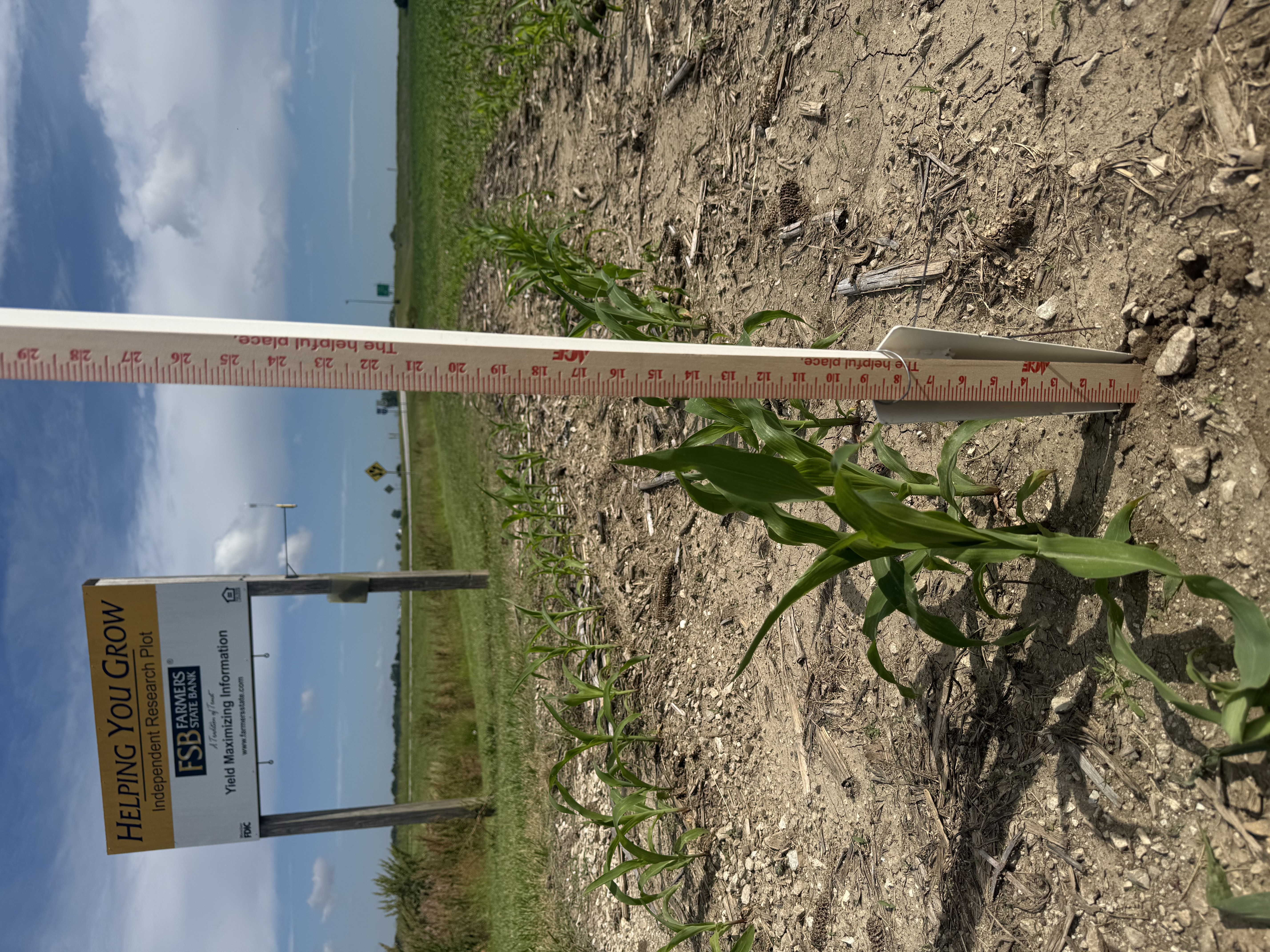
Pike County - The corn plot in Pike County is currently averaging 12-14 inches in height and is approaching the V5 growth stage. At this point in development, the crop is beginning to transition into a period of rapid growth, making adequate moisture and nutrient availability increasingly important.
As temperatures increase and growing degree units accumulate, corn growth is expected to accelerate throughout June. Continued monitoring of soil moisture and nutrient availability will be important as the crop enters this critical growth phase.
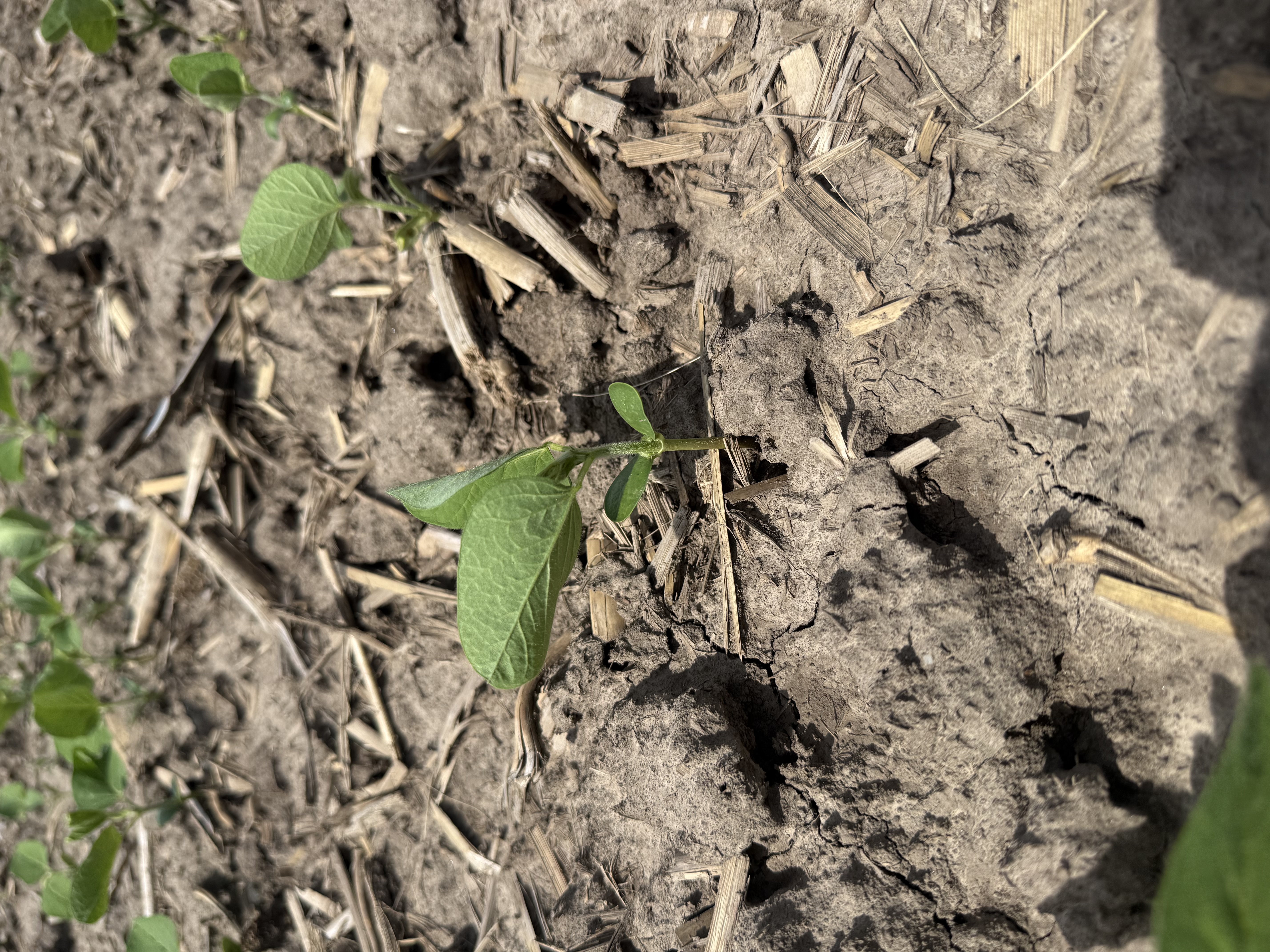
Greene County - The soybean plot in Greene County is showing strong early emergence and is currently in the V1-V2 growth stage. Early-season development has been largely supported by favorable soil temperatures and timely rainfall.
Ideal Planting Window - 2026 Season
For West Central Illinois, the typical ideal planting window remains:
- Corn: April 15 - May 10
- Soybeans: April 20 - May 20
Planting within this range generally maximizes yield potential by aligning crop development with favorable temperature and daylight conditions. In 2026, many growers were able to plant within or near this optimal window, though brief weather delays created some staggered emergence across the region.
May Rainfall Summary
Rainfall totals across the region varied by county, with most areas landing near or slightly below their long-term averages. Below is a summary of May precipitation levels:
| Location |
May Rainfall Totals |
Normal Average |
| Pike County |
3.0 - 4.0 inches |
~5.0 inches |
| Greene County |
2.4 - 3.2 inches |
~4.9 - 5.5 inches |
| Adams County |
3.2 - 3.8 inches |
~5.1 inches |
| Brown County |
3.0 - 3.8 inches |
~5.0 inches |
| Scott County |
2.5 - 3.2 inches |
~5.0 inches |
SOURCE: NATIONAL WEATHER SERVICE
While rainfall distribution was generally beneficial for emergence and early vegetative growth, some areas experienced short dry windows or uneven accumulations that influenced planting pace and early stand uniformity.
Looking Ahead
While the season is still in its early stages, both research plots are off to a promising start. Over the coming months, we will continue tracking crop development, weather conditions, and management practices to identify insights that can help maximize yield potential.
We invite you to follow along throughout the season as we share updates, observations, and lessons learned from our 2026 Research Plots!